
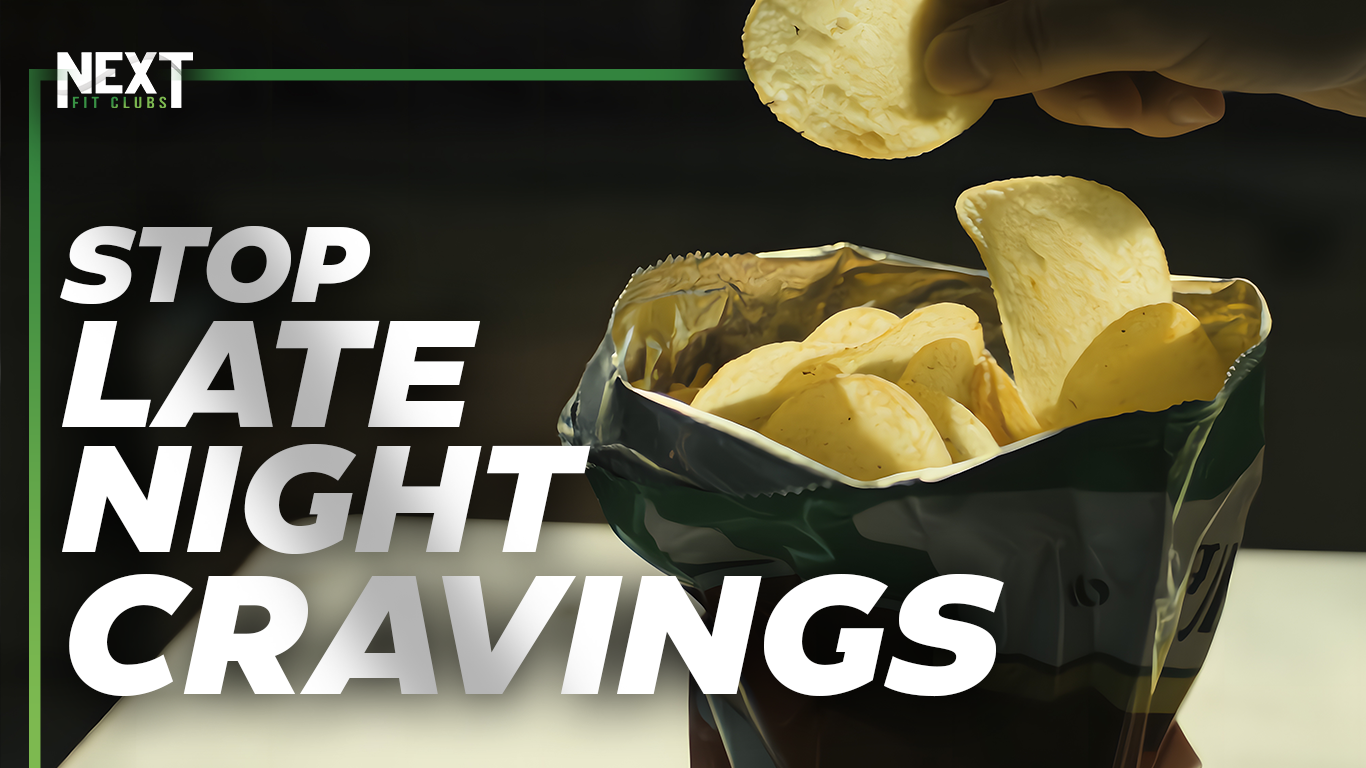

You Are Not Failing at Night. You Are Underfed by 4pm.
You did everything right. Coffee instead of breakfast. A salad at your desk that you ate standing up. You even got to the gym in Hillsborough or Princeton after work. Then you walked in the door at 7:40, and by 9:15 you had eaten most of a sleeve of crackers standing at the counter with the lights off, and you could not really explain why.
This is the single most common thing our coaches hear in a first nutrition sit-down. It is also the most misunderstood, because almost everyone who describes it uses the word willpower. We want to offer you a less flattering but far more useful explanation.
By the time you got home, your body had been running a deficit for about ten hours, your blood sugar had been on a roller coaster since that coffee, you had made roughly two hundred decisions since 7am, and nothing in your kitchen was ready to eat. Evening eating is not a character defect. It is the predictable output of those four inputs.
If you are still working out whether what you feel at night is actual hunger or something else, start with our earlier piece on telling hunger apart from cravings. This post picks up where that one ends, with what to actually do about it.
Your day right now, and the day that fixes it
Most people trying to lose weight in Hillsborough and Princeton are running some version of the column on the left.
| What most days look like | What a day that holds up looks like | |
|---|---|---|
| Morning | Coffee, maybe nothing else | Protein first, 30g or more, within an hour or two of waking |
| Midday | Light salad, eaten fast, often at a desk | A real meal with protein, carbs and fat, sitting down |
| Afternoon | Nothing, then a granola bar at 4 in a panic | A planned snack with protein, around 3 or 4 |
| Post-workout | Nothing, straight to the car | Something, even small, within an hour |
| Dinner | Decided at 7:30 while standing in the kitchen | Decided before you left the house that morning |
| After dinner | Grazing until bed | A planned something sweet, eaten sitting down |
| Total protein | Usually well under target | Hit by dinner, not scrambled for at 9pm |
Look at the left column again. Almost every item is a decision deferred. The right column is not stricter, it is earlier. That is the whole shift.
The first fix is the one nobody wants: eat more during the day
This sounds like the opposite of a weight loss strategy, so we will be direct about why it is not.
When you eat very little between waking and 5pm, three things happen. Ghrelin, your hunger signal, climbs all day and does not negotiate. Your blood sugar swings, so by late afternoon your body is specifically asking for fast carbohydrate, not for chicken and broccoli. And your decision-making capacity, which is a finite resource, is spent. You are not choosing the crackers at 9pm. The 7am version of you chose them by skipping breakfast.
People who front-load their intake almost always eat less across the whole day, not more, because the evening stops being a rescue mission. The scale moves because the pattern stabilized, not because you white-knuckled it harder.
The other quiet cost of chronic under-eating is that you cannot build anything on it. You are strength training to change your body composition. Muscle is built from surplus protein and recovered sleep, and the body deprioritizes building anything when it believes food is scarce. Under-eating all day and then overeating at night is the metabolic equivalent of training hard and never sleeping.
Protein, the one number worth tracking
If you track nothing else, track this. Protein is the lever with the best return for most people, because it does three jobs at once: it keeps you full, it protects muscle while you lose fat, and it blunts the blood sugar swing that drives the 4pm crash.
A reasonable working target for most adults who strength train is somewhere between 0.7 and 1 gram of protein per pound of goal body weight per day. For a 160 pound goal weight, that is roughly 110 to 160 grams. Treat the bottom of that range as a floor, not a ceiling.
The number matters less than the distribution. Most people get almost none until dinner and then try to make it up in one sitting. Aim for 30 to 40 grams at each main meal and 15 to 20 in a snack, and the math takes care of itself without a spreadsheet.
What that actually looks like:
- Greek yogurt with berries, about 20g
- Three eggs plus a slice of toast, about 20g
- A chicken breast the size of your palm, about 35g
- A protein shake, 25 to 30g, and no, this is not cheating
- A can of tuna, about 30g
- Cottage cheese, a cup, about 25g
If you do not know your number, stop guessing at it
Here is the problem with letting an app decide how much you should eat. Most calorie and macro apps run some version of the Mifflin-St Jeor equation. It is the most accurate of the common formulas, and it still lands within 10 percent of a person’s actual measured metabolic rate only about 70 to 80 percent of the time, with accuracy dropping the further you sit from the population average it was built on.
Sit with that for a second. Somewhere between one in four and one in three people are building an entire plan on a starting number that is meaningfully wrong, and they have no way of knowing which group they are in. If you have followed an app faithfully and gotten nowhere, this is one of the most common reasons, and it has nothing to do with discipline.
Our coaches see the other half of this problem every week. When we ask someone to guess their own body fat percentage before a scan, most people are wrong, often by enough to change what their plan should be. That matters more than it sounds. Lean mass is what your protein target and your calorie floor should both be built from, so if the body composition going in is a guess, every number downstream of it inherits the error. People then spend months blaming their consistency for what was really a bad starting input.
This is what our certified nutrition coaches are for. They build your targets from an InBody scan, which measures your actual lean mass and body fat rather than estimating them from your height, weight and age, and then combine that with what your training week genuinely looks like. That produces a number for your body. An app produces a population average wearing your name.
The InBody machine is at our Hillsborough club. A scan is $20 and it is open to anyone, members of either location and non-members alike, so if you train in Princeton it is worth the drive once to find out where you actually stand.
Prep that takes forty minutes, not your whole Sunday
The reason most meal prep fails is that it is presented as a four-hour ritual with sixteen matching containers. Nobody with a job and kids sustains that. Here is the version that survives a real week.
- Cook one protein in bulk. A tray of chicken thighs, a pound of ground turkey, a dozen hard-boiled eggs. One thing, not five.
- Cook one carbohydrate in bulk. Rice, potatoes, pasta. It reheats fine.
- Buy, do not chop, your vegetables. Pre-cut, frozen, bagged salad. The moral high ground of chopping your own is not worth the Wednesday you skip vegetables entirely.
- Portion only the snack. The 3pm snack is the one that breaks the day, so it is the one worth putting in a bag in advance. Everything else can be assembled.
- Decide dinner in the morning. Not cook it. Decide it. Take the chicken out of the freezer. That one act removes the 7:30 decision that always loses.
That is it. Forty minutes, usually Sunday, sometimes split across two weeknights. You are not prepping meals so much as removing decisions.
What to grab on the way home, if prep did not happen
It will not happen some weeks. That is normal, and the plan has to survive it. A frozen pizza is a fine answer occasionally. But if you want something that will actually hold you until morning, you are looking for the same thing every time: a real protein, a real carbohydrate, and vegetables you did not have to think about.
Near the Hillsborough club, a few minutes down Route 206:
- The Fresh Fig, 640 Route 206, for a big salad with chicken added. Generous portions, closes at 8 on weekdays.
- Poke Bowl & Bubble Tea, 601 Route 206, where a build-your-own bowl with double protein over rice is about as close to a prepped meal as takeout gets.
- Tender Lovin Grill, 415 Amwell Road, open seven days, with bowls and grilled options that are not fried by default.
Near the Princeton club, heading toward town:
- Chopt, 301 North Harrison Street, where you can double the protein on any salad or warm bowl.
- Alfalfa, 140 Nassau Street, for salmon and grain bowls, open until 9.
- Mamoun’s Falafel, 20 Witherspoon Street, for a shawarma or falafel platter, fast and inexpensive.
The order matters more than the restaurant. At any of these, the move is the same: pick the protein first, double it, add the grain, and get the dressing on the side. You are not looking for a diet meal. You are looking for a meal that ends the day instead of starting a second one.
Keeping the foods you love, which is the actual point
Here is where most plans go wrong, and it is the reason so many of our members arrive having already tried four of them.
Cutting out the foods you love works for about eleven days. Then the restriction produces exactly the craving it was meant to prevent, you eat the thing, you feel like you failed, and you quit the whole plan over one cookie. The restriction caused the binge. Not the cookie.
So plan the thing in. If you want something sweet after dinner, have something sweet after dinner, sitting down, on a plate, as a decision rather than a lapse. A planned dessert eaten deliberately is a smaller event in every way than an unplanned one eaten standing at the counter, and it does not come with the spiral afterward.
The pattern we want is simple. Protein and vegetables take up most of the plate, the foods you love are in the plan on purpose, and nothing is forbidden, which means nothing has power over you.
The mindset shift
Stop grading your day pass or fail. A day where you hit your protein and ate some cookies is a good day. A day where you ate nothing until 6pm and then nothing you planned is a bad day even if the total looks low, because the pattern will not hold and the muscle you are training for will not get built.
And stop trying to fix it in a sprint. A crash diet in January produces exactly the 8pm problem this post is about, in March. The members who change their body composition and keep it are the ones who got boring: they ate enough, they hit protein most days, they trained consistently, they took their scheduled rest days, and they kept their favorite foods. That is not a compromise version of the plan. That is the plan.
It is also worth knowing that movement outside the gym matters here. A day spent entirely at a desk changes both your appetite signals and your total output, which is why we wrote separately about daily N.E.A.T.
Where we come in
If you read that and thought the logic is clear but my actual week is harder than that, that is the normal response, and it is what our coaches do all day.
Nutritional Counseling is a sit-down with a coach who builds the targets around your real schedule, your family’s dinners, and what you will actually eat, rather than handing you a generic meal plan. This is the right starting point if the training is already going fine and nutrition is the gap.
Body Recomp and Training Plus pair that nutrition work with your programming, because protein targets and strength training are the same project. Losing fat while keeping muscle is largely a question of eating enough protein and giving your body a reason to keep the muscle, which is what the training is for.
Personal Training gives you the weekly accountability and an honest conversation about what happened on the days that went sideways.
We are at 129 Stryker Lane in Hillsborough and 390 Wall Street in Princeton. Nutrition consultations run at both clubs. InBody scans are at Hillsborough, $20, and open to anyone who walks in.
Book a consultation and bring one honest week of eating with you. No judgment, and no plan that asks you to give up the foods you love.



0 Comments