
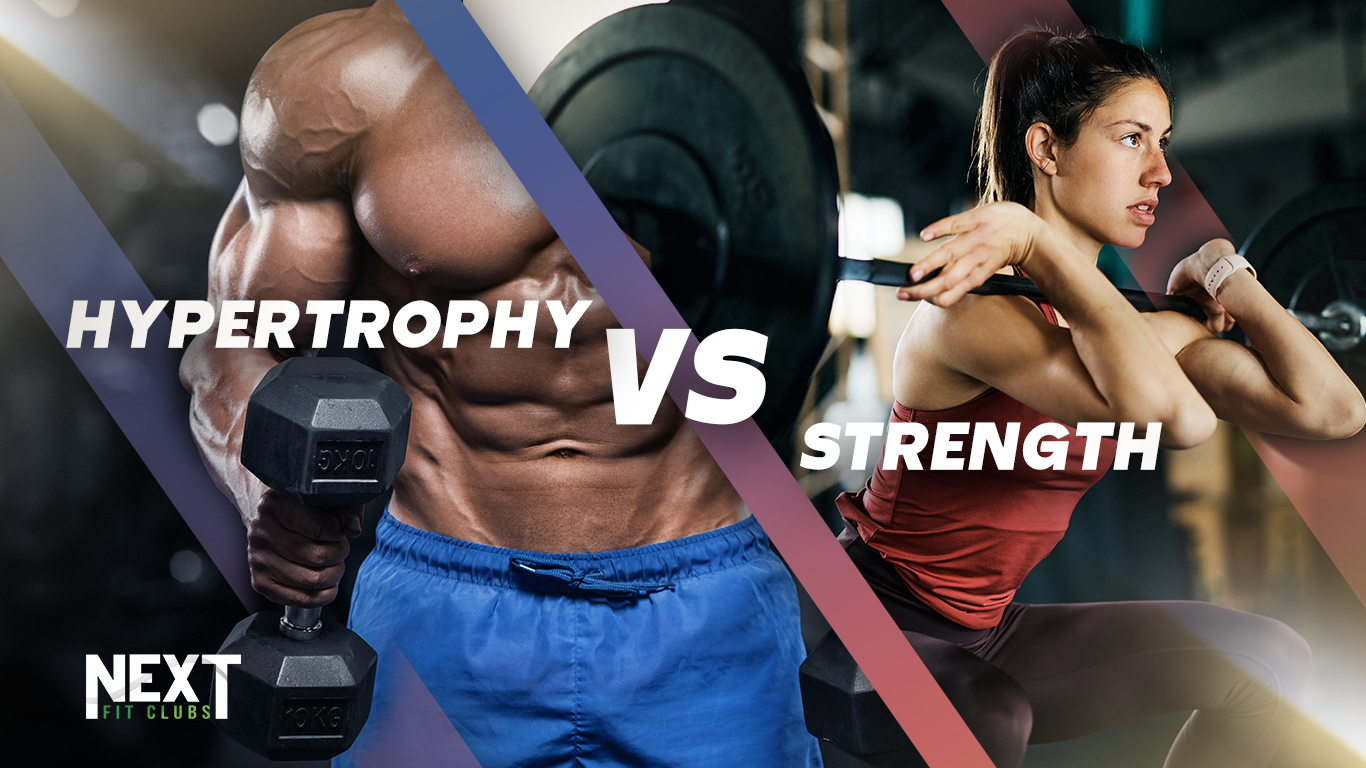

In the world of fitness, two popular goals often dominate gym conversations: building muscle size (hypertrophy) and building raw strength. While they may seem similar on the surface, hypertrophy and strength training are two distinct training styles with different methodologies, expectations, and outcomes.
In this guide, we’ll break down the differences between hypertrophy and strength training — from definitions and training protocols to lifestyle factors and realistic timelines. Most importantly, we’ll show you why elite-level execution and long-term consistency are non-negotiable no matter which path you choose — and how NexT Fit Clubs’ Training Plus program can help you reach your goals faster.
What is Hypertrophy Training?
Hypertrophy refers to the increase in the size of muscle cells. The goal of hypertrophy training is to grow your muscles — creating more volume, shape, and definition.
- Main Goal: Muscle size
- Typical Reps: 6–12 per set
- Rest Between Sets: 30–90 seconds
- Training Focus: Time under tension, volume, mind-muscle connection
- Timeline Expectations: Noticeable changes in 8–12 weeks with consistent, progressive training and proper recovery
Hypertrophy requires calculated repetition ranges, moderate to high training volume, and excellent form. It’s about maximizing the stress on the muscle to trigger growth — not just moving heavy weight.
What is Strength Training?
Strength training is focused on increasing the amount of weight your body can lift. Think of it as training your central nervous system to produce more force.
- Main Goal: Maximal force output
- Typical Reps: 1–6 per set
- Rest Between Sets: 2–5 minutes
- Training Focus: Heavy loads, low reps, long rest, neurological adaptation
- Timeline Expectations: Strength gains often start within 4–6 weeks but major increases can take 6–12 months or more
Strength training is not just for powerlifters — it’s for anyone who wants to feel more capable, functional, and powerful. But it requires patience, perfect form, and consistent overload.
Hypertrophy vs Strength: Key Differences
| Category | Hypertrophy Training | Strength Training |
|---|---|---|
| Primary Goal | Muscle size | Maximum strength |
| Rep Range | 6–12 | 1–6 |
| Load | Moderate to heavy | Very heavy |
| Rest Time | Short (30–90 sec) | Long (2–5 min) |
| Volume | High | Low to moderate |
| Movement Speed | Controlled (focus on tension) | Explosive (focus on power) |
| Adaptation Focus | Muscular hypertrophy | Neurological efficiency |
| Visible Results | Muscle growth & definition | Strength increase, less visible |
What Training Style is Right for You?
The answer: it depends on your goals and your lifestyle.
- Want to look more muscular and sculpted? Hypertrophy training is your lane.
- Want to lift heavy, feel powerful, and dominate compound lifts? Strength training is where you’ll thrive.
- Want both? A phased approach that includes both hypertrophy and strength cycles may be ideal.
Whichever you choose, remember:
Progress takes time. Execution must be elite. Consistency wins.
Example Weekly Training Splits
Here are sample weekly splits to help you visualize what each style may look like in practice.
Sample Hypertrophy Split (5 Days)
Goal: Increase muscle size across all major muscle groups
- Day 1: Chest + Triceps
- Day 2: Back + Biceps
- Day 3: Legs (Quads + Glutes Focus)
- Day 4: Shoulders + Arms
- Day 5: Hamstrings + Core
Each workout includes 3–4 sets per movement, 8–12 reps, slow tempo, short rest, and high focus on form. For females, we would likely swap this around a bit to give a higher focus to glute and shoulder growth.
Sample Strength Split (4 Days)
Goal: Maximize big lifts like squat, bench, deadlift
- Day 1: Heavy Squat + Accessory (Glutes/Core)
- Day 2: Heavy Bench + Accessory (Triceps/Shoulders)
- Day 3: Rest or Active Recovery
- Day 4: Heavy Deadlift + Accessory (Back/Hamstrings)
- Day 5: Overhead Press + Accessory (Upper Back/Traps)
Low rep ranges (3–5), long rest, and progressive overload are critical.
Trusting the Process: The Reality of Long-Term Training
No matter your training style, there are three universal truths:
- Progress isn’t linear. You will hit plateaus.
- Recovery is just as important as training.
- Lifestyle habits (nutrition, hydration, sleep, stress management) make or break results.
These are not “just show up and sweat” programs. They require:
- Advanced form technique
- Strategic deloads
- Periodized progressions
- Nutritional consistency
- Sleep and recovery planning
That’s why our Training Plus program at NexT Fit Clubs doesn’t just pair you with a coach — it gives you a full support system. You get personalized workouts and lifestyle guidance to help you execute at a high level, in and out of the gym.
Final Thoughts
Hypertrophy and strength training each offer powerful benefits — but they require discipline, focus, and a long-term mindset. When done correctly, either can completely transform your physique, performance, and confidence.
Ready to start your journey?
✅ Book a free Training Plus consultation today and let’s figure out which path is right for your goals, your schedule, and your life.



0 Comments